


Seat Belt Friction Tester AG90
Seat Belt Friction Tester is used to simulate the pilling changes of clothing caused by seat belt friction.
read more


 +8615280858852

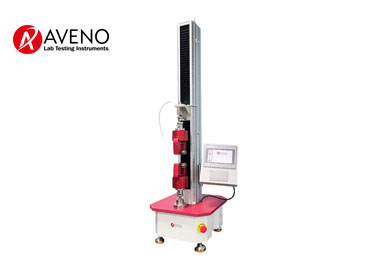
The Single Column Tensile Strength Tester is mainly used for stretching, tearing, peeling, constant elongation, constant load, Analysis and testing of mechanical properties such as elastic recovery, suture slippage, modulus, and single yarn strength. 1) The Universal Strength Tester adopts touch screen control, Chinese and English menu, easy to operate. 2) The built-in thermal printer is convenient for quick printing of test results on site. 3) The professional computer sharing software can realize two-way operation with the computer, and can perform report statistics, visual analysis of graphs, etc.; this software is open software, and can edit the required test program according to its own needs; it can also support remote instrument upgrades and maintain. 4) The column is made of aluminum alloy profile, and the surface is treated with high-temperature curing spray, which is scratch-resistant and not easy to fade. Maintenance of Single Column Tensile Strength Tester 1) Every time you finish the experiment, you have to clean it up. Keep the equipment clean. 2) After the fixture is used, it should be preserved with antirust oil. 3) The replacement of sensor or plug-in connection line must be carried out after the power supply is turned off. If the sensor access terminal is suspended, it is easy to damage the amplifier and ad conversion circuit due to static electricity. 4) The Tensile Test Equipment needs to calibrate the force sensor regularly to ensure the accuracy of the measurement value of the instrument. 5) Lubricate the moving parts on a regular basis. 6) In case of failure of the instrument, the professional staff shall be requested to repair. The spare parts must be replaced by the original model. 7) Please operate the instrument in accordance with the precautions and requirements of this instruction. AVENO Machine Recommend: Universal Tensile Strength Tester (Single Column) AG02 Contact Us Now! Sales Dept Tel: +86 15280858852 Email: sales@avenotester.com Skype: sales@avenotester.com Web: www.avenotester.com
read more
Happy Chinese New Year my friends. AVENO wish you happy Spring Festival. Anything inquiry please contact us as below: Sales Dept Tel: +86 15280858852 Email: sales@avenotester.com Skype: sales@avenotester.com Web: www.avenotester.com
read more
Time always passes by when we don't expect it, and the new year has come to us. New year, new wish, new hope, new life, I wish you in the new year, all your wishes can come true, all your dreams can come true, all your expectations can come true, all your sacrifices can be fulfilled. AVENO is a company that produces and sells laboratory testing instruments. Thank you for your support in the past year. We have cooperated very happily in the past year. Thank you for your care. In 2023, we will provide you with better service and start our new year Cooperation. Happy New Year to you and your family. Anything inquiry please contact us as below: AVENO technology co., ltd. Email: sales@avenotester.com AVENO Instruments, located in Quanzhou city of China, founded in Hongkong when 1998, more than 24 years of R&D and production experience of laboratory physical testing instruments, which have been affirmed by third-party testing institutions around the world such as SGS, UL, BV, Intertek etc. Our main products including: 1.Textile Testing Equipment(including Fabric tester. Yarn tester Fiber tester.etc.) 2.Footwear Testing Equipment(including Shoe tester.Leather tester.Rubber tester.etc.) 3.Children Products Testing Equiment(including Toy tester.electronic toy tester.etc.)
read more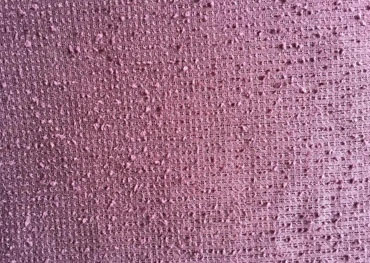
With the development of the times and the continuous improvement of people's living standards, the requirements for clothing have also been continuously improved. It is not limited to warmth, durability, and new requirements have been put forward for comfort, aesthetics, and functionality. The fabric is prone to fluffing and pilling during wearing. This phenomenon not only deteriorates the appearance and feel of the fabric, but also wears the fabric and reduces the performance of the fabric. Fabric pilling process Factors Affecting Pilling Factors affecting fabric pilling are mainly the effects of fiber properties, yarn, fabric structure, dyeing and finishing process, etc. 1. Fiber properties Fiber strength Fibers with high strength, large elongation, high resistance to repeated bending, and strong wear resistance are not easy to be broken or shed when rubbed, but will further entangle with the surrounding hair clumps and hair balls to form larger balls. However, the fiber strength is low, and the formed hair balls are easy to fall off from the surface of the fabric after friction. Therefore, the fiber strength is high and easy to pill. Fiber length Short fibers are easier to pill than long fibers, and long fibers are less prone to pilling than short fibers. The frictional resistance of long fibers in the yarn is greater than that of short fibers, and it is not easy to be drawn out from the yarn. In the same number of fiber cross-sections, the end of the long fiber exposed to the surface of the yarn is less than that of the short fiber, and the chance of being rubbed by external force is small. Polyester filaments have high strength and are not easy to wear and break when subjected to mechanical external force, and polyester filament fabrics are not easy to pilling. Fiber fineness For the same raw materials, thin fibers are easier to pill than thick fibers. The thicker the fibers, the greater the bending stiffness. Friction between fibers The friction between the fibers is large, the fibers are not easy to slide, and it is not easy to pilling. Fiber blends are prone to pilling Especially the blended fabrics of chemical fibers and wool, cotton, and regenerated cellulose fibers are prone to pilling, because the chemical fiber fibers are relatively strong ball fibers and are not easy to fall off. Fiber cross-sectional shape The fiber with special-shaped cross-section has high bending rigidity, is not easy to bend and entangle, and has a low probability of relative contact and friction, is not easy to pull out and entangle, and is not easy to produce pilling. Fiber crimp The more crimped the fiber is, the less likely the fiber is to stretch when twisting, and the fiber is easy to loosen and slip during the friction process, forming plush on the surface of the yarn. Therefore, the better the curl of the fiber, the easier it is to pilling. 2. Yarn The main factors that affect the pilling of fabrics are yarn hairiness and wear resistance, which involve ...
read more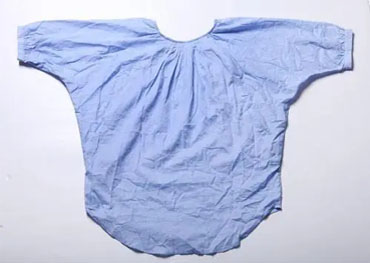
In the daily process of dressing, the most troublesome thing is picking up the clothes when I am anxious to go out in the morning. I often have this trouble. I don't know if you will. Ironing is time-consuming when it is too late. Wrinkle of clothing fabric directly affects its beauty and wearing effect. So, why do clothes wrinkle, and how should we deal with wrinkle prevention in daily life? So what exactly causes the fabric to wrinkle? Wrinkling: The phenomenon of creases or wrinkles caused by external forces such as rubbing, squeezing, twisting, and twisting of fabrics in the process of wearing and washing care is called wrinkling. 1. Micro perspective Under the action of external force, the fibers constituting the fabric are deformed. After the external force is removed, the deformation cannot disappear, cannot be restored to its original state, or can only be partially restored. 2. Macro perspective Wrinkle formation can be divided into two stages: crease generation and crease recovery after external force removal. 1) Crease generation: Under the action of external force, the fabric is bent and deformed. Since the external force is far greater than the resistance of the fabric due to bending, the fabric is forced to bend and deform, that is, beyond the bending elastic deformation range of the fabric, yielding deformation. 2) Crease recovery After the external force is removed, the crease bending of the fabric begins to recover under the elastic recovery force generated by the internal stress, that is, the angle of crease recovery starts to increase. With the extension of time, the crease recovery angle increases, and its change is similar to the material creep law. In this process, in addition to the elastic recovery force of the fabric, it is also affected by the friction resistance, which is generated by the relative slippage between the yarns and between the fibers of the yarn, and its direction is opposite to the elastic recovery force. When the elastic recovery force and friction resistance of the fabric are balanced, the fabric reaches the maximum recovery effect. At this time, the fabric folding angle is the crease recovery angle of the fabric. Crease resistance of fabrics: The ability of fabric to resist wrinkling and deformation is called wrinkle resistance, that is, the fabric can be folded and pressurized under specified conditions. After the load is removed, the crease of the fabric can return to the original state to a certain extent, which is also called the crease recovery of the fabric. It can be seen from the causes of fabric wrinkling that to overcome the shortcomings of fabric wrinkling, it is necessary to reduce the opportunity for fiber to generate relative displacement between macromolecules under external force, or prevent the formation of hydrogen bonds at new positions when macromolecules have relative displacement, so that macromolecules can quickly return to their original positions after the removal of external fo...
read more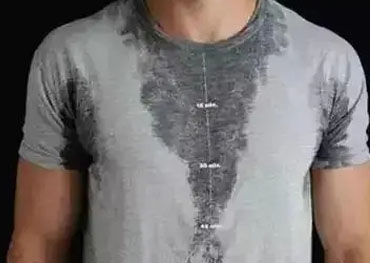
The autumn wind is coming, and summer is slipping away. Summer is a season easy to sweat. After a good sweat, it can make us feel happy, but at the same time, many people are worried. After sweating, clothes are easy to fade. In fact, this is likely to be caused by the unqualified color fastness of your clothes to perspiration. Colour fastness to perspiration There are millions of effective sweat glands on human skin, and the forehead, armpits, chest, back and palms sweat more; therefore, clothes often worn in summer, such as shirts, T-shirts and other clothes, will fade seriously in these parts. As we all know, the composition of human sweat is complex, the main component of which is salt, which varies from person to person. Sweat is acidic and alkaline. The short-term contact of textiles with sweat may have little effect on its color fastness, but long-term contact with the skin and sweat will have a greater impact on some dyes. Clothing with unqualified dye fastness is easy to transfer dyes from textiles to human skin through sweat, etc. The molecules of dyes and heavy metal ions may be absorbed by the human body through the skin and endanger health. The color fastness to perspiration reflects the discoloration of the textile itself and the staining of the lining fabric under the combined action of pressure and temperature in different test solutions containing histidine. How to improve the color fastness to perspiration Improve the color fastness of the fabric to perspiration: 1. The most important way is to choose dyes reasonably, especially dyes with high fixation rate and good stability should be used. 2. Reasonably formulate and control the dyeing process, strengthen the fixing conditions, and form a covalent bond with high stability, so that the dye can be fully fixed. For example, when dyeing dyes with poor reactivity, a catalyst can be used, or an appropriate fixing agent can be used, or the color can be fixed at a relatively high temperature. AVENO Machine Recommend: Fabric Perspiration Tester AC08 Contact Us Now! Sales Dept Tel: +86 15280858852 Email: sales@avenotester.com Skype: sales@avenotester.com Web: www.avenotester.com
read more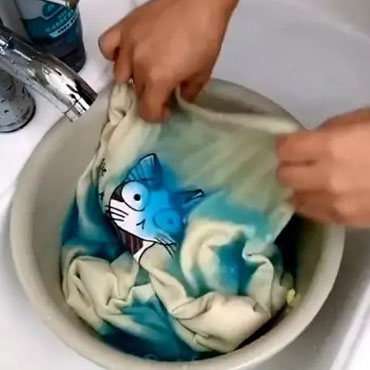
Clothes stained during washing or soaking? I believe that everyone is familiar with this situation, and many people should have encountered such embarrassing things. This is due to the mixed washing of dark and light-colored clothes, the fading of dark-colored clothes and dyeing on light-colored clothes, resulting in staining of light-colored clothes, or the mutual staining of dark and light colors on a piece of clothing after washing. In response to this phenomenon, there is a professional name in textiles: splicing and mutual dyeing. Test methods for testing the interdyeing of textiles by splicing, namely the washing method and the soaking method. The washing method The sample is placed in the specified washing solution, mechanically stirred according to the specified bath ratio, time and temperature, then washed and dried, and the staining of the light-colored sample is evaluated with a staining gray card or an instrument. The soaking method The sample is placed in the specified washing solution, and after treatment, it is placed between two flat plates with a specified pressure in the test device. After cleaning and drying, the staining of the light-colored sample is evaluated with Gray scale for color staining or an instrument. Sample preparation: 1. The sample is a ready-made garment. Cut a piece of dark and light-colored fabrics, 4×10cm, and sew them along the short side to form a combined sample. 2. Weigh the sample to the nearest 0.01g. 3. Add detergent according to the sample weight. The sampling and soap solution configuration of the two methods are the same, the only difference is the test equipment and operating procedures. Test Instruments The washing method: Wash Colour Fastness Tester The soaking method: Precision Drying Oven Operating procedure The washing method 1. Put the sample and test solution into the container 2. Put the container into the machine, set the temperature to 40 degrees, and test it for 30 minutes. 3. Take out the sample and rinse it with running water until it is clean. The soaking method 1. Put the sample and test solution into the container, press and move from time to time to completely soak the sample, take out the sample and place it on the Perspiration Tester, and apply a pressure of 5000g. 2. Put the loaded sample into the Precision Drying Oven, the temperature is 37 degrees, for 4 hours, take out the combined sample, and rinse it with running water until it is clean. The test temperature of the washing method is 3°C higher than that of the soaking method. In terms of test time, the washing method requires 30 minutes and the soaking method is 4H. After the test is completed, after rinsing the test, it is necessary to absorb excess water with filter paper and hang it to dry. The samples tested by the two methods are evaluated by Gray scale for color staining. From the test results, the stain level of the soaking method is much more serious than that of the washing method. Color Fastness Test Machines abo...
read more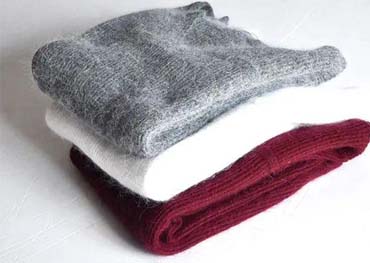
In the process of wearing and using fabrics, different degrees of pilling will occur. So how can we reduce the pilling of our fabrics? Spinning process During the spinning process, the fibers in the twisting triangle area undergo repeated internal and external transfer due to uneven force, causing the head end, tail end or middle part of most fibers to protrude from the yarn body, forming hairiness. In order to reduce the hairiness, the textile mill rationally mixes cotton, optimizes the process, adopts advanced textile technology according to its own conditions, and tries to control the occurrence of hairiness within the scope of its ability. Weaving process The organizational structure of knitted fabrics has a great influence on pilling, and the tight organization is less prone to pilling than the loose organization. Dyeing and finishing process Singeing: Singeing is a great way to reduce hairiness and reduce pilling. Adjustment of technical parameters: After the dyeing and finishing technology is determined, parameters such as bath ratio time can be adjusted appropriately, for example, the bath ratio can be appropriately increased or the technical curve can be improved to shorten the time. Use of auxiliaries: Anti-pilling agents can be added during the bleaching process. The softener is added during the dyeing process to reduce the mixed friction between the yarns and between the fabric and the dyeing machine, and at the same time, it can control the leakage of the fibers from the end of the yarn, thereby reducing the chance of pilling. Hairiness appressing method: The hairiness appressing method is to use mechanical and physical and chemical methods to make the hairiness tightly adhere to the surface of the fabric, so as to reduce feathers and reduce pilling. Specifically, the use of resin auxiliaries or chemical adhesives, through rolling, makes the hairiness lodged and fixed on the surface of the yarn. Through the above methods, the pilling can be improved to a certain extent. Reducing pilling is a systematic project, and it is recommended to take comprehensive measures in the production process of fiber production, spinning, weaving, dyeing and finishing. AVENO related Abrasion and pilling tester: Please click: Abrasion and pilling tester Contact Us Now! Sales Dept Tel: +86 15280858852 Email: sales@avenotester.com Skype: sales@avenotester.com Web: www.avenotester.com
read more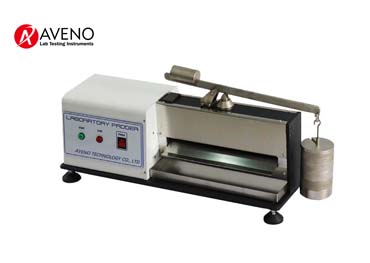
Laboratory Wringer suitable for testing the liquid content of small cloth samples in the textile printing and dyeing and finishing process in the laboratory. 1. Operation steps of Laboratory Padder: 1) Items to be confirmed before operation: Confirm whether the power supply meets the requirements. Whether the water collecting tray is installed and whether the internal residual liquid is poured out. Whether the Lab Wringer (Padder) is stable. 2. Plug in the power plug and connect the power supply. 3. Install a weight of appropriate weight on the weight base. 4. Press the start button to start the Lab Wringer (Padder), and the drum starts to rotate. 5. Place one end of the sample flat at the joint of the two rollers. 6. The roller drives the sample to rotate backward, and at the same time, it removes excess water. 7. After the end of the sample is removed from the rear of the drum, grasp the end of the sample and move with the sample. 8. Take the sample after the sample comes out completely from the rear. 9. Press the stop button to turn off the power and remove the water collected in the water collecting pan. AVENO Machine Recommend: AC31 Laboratory Wringer Contact Us Now! Sales Dept Tel: +86 15280858852 Email: sales@avenotester.com Skype: sales@avenotester.com Web: www.avenotester.com
read more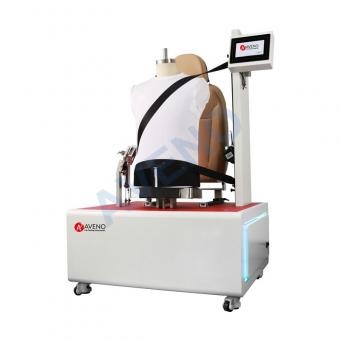
Seat Belt Friction Tester is used to simulate the pilling changes of clothing caused by seat belt friction.
read more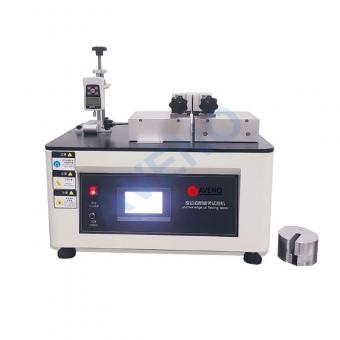
According to the bending force of the sample, according to the standard spacing and load weight requirements, perform reciprocating bending resistance under the specified testing speed conditions, observe whether there are cracks, coating peeling, adhesive delamination and other abnormal quality conditions on the surface, suitable for belt, shoulder strap, luggage soft lift and other belt products
read more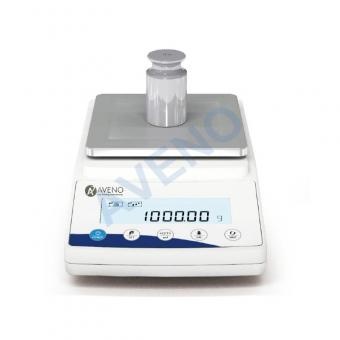
Double row LCD display, front and rear two display screen. Rechargeable battery. Weighing, peeling, counting, unit conversion. RS232 data interface, linking computers and printers.
read more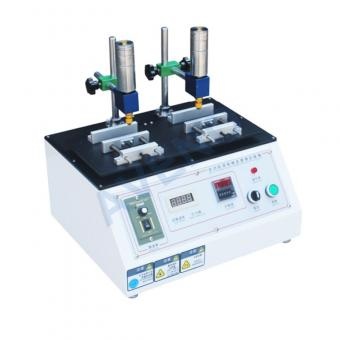
Alcohol Rubber Abrasion Tester used for glass cover plates, films, plastics, automotive parts, rubber, leather and textiles, electroplating, freely detachable components, paints, printed patterns and other products.
read more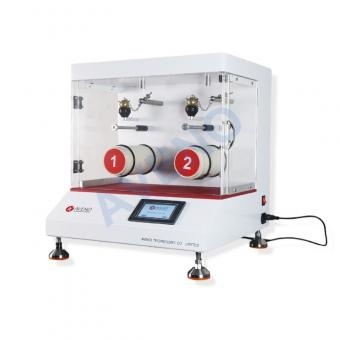
ICI mace snag tester applicable to knitted and woven fabrics and other fabrics that are prone to snags, applicable to woven and knitted fabrics made of textured yarns, non-textured yarns and spun yarns.
read more
 May 01, 2026
Dear Customers and Partners, Thank you for your long-term support and trust. In accordance with the national legal holidays and the company's actual arrangement, AVENO holiday schedule for the May Day Labor Day 2026 is hereby notified as follows: May 1, 2026 (Friday) to May 5, 2026 (Tuesday), a total of 5 days. We will resume normal work on May 6, 2026 (Wednesday). AVENO apologize for any inconvenience caused by our holiday arrangements and appreciate your understanding. We will respond promptly after the holidays. If there are any urgent matters during the holidays, we will provide services to you in a timely manner. Wish you a happy May Day Holiday! AVENO TECHNOLOGY CO., LTD Sales Dept Tel: +86 15280858852 Email: sales@avenotester.com Skype: sales@avenotester.com Web: www.avenotester.com
 Apr 04, 2026
Dear Valued Customers and Friends: AVENO will have two days holiday during the Qingming Festival: Holiday period: April 6th (Sunday) to April 7th (Monday), a total of 2 days. We will resume normal work on April 7th (Tuesday). During the holiday, please leave a message if you have any urgent matters. We will handle them as soon as possible after resuming work. We apologize for any inconvenience this may cause. Thank you for your continued support and trust. We wish you a safe and peaceful holiday and a healthy Qingming Festival! AVENO TECHNOLOGY CO., LTD Sales Dept Tel: +86 15280858852 Email: sales@avenotester.com Skype: sales@avenotester.com Web: www.avenotester.com
 Mar 11, 2026
AVENO pays tribute to all the outstanding women in our team, clients, and partners. Today, AVENO has prepared heartwarming gifts for its employees, wishing all women a happy Women's Day. Your wisdom, talent, and strength drive our innovation, development, and success every day. AVENO thanks you for your valuable contributions to the company's growth and success. Wishing you a happy, confident, and wonderful International Women's Day! AVENO TECHNOLOGY CO., LTD Sales Dept Tel: +86 15280858852 Email: sales@avenotester.com Skype: sales@avenotester.com Web: www.avenotester.com
 Mar 02, 2026
With the warm spring breeze and the renewal of all things, AVENO held its Spring Festival reopening ceremony on February 24, 2026. All teams have returned to their posts and fully resumed production, order fulfillment, delivery, and after-sales support. We apologize for any inconvenience caused during the holidays. A new journey has begun. Guided by ambition and a spirit of enterprise, AVENO will strive for steady growth, continuous innovation, and better performance in the Year of the Horse, and work hand in hand with partners to create new glories. AVENO TECHNOLOGY CO., LTD Sales Dept Tel: +86 15280858852 Email: sales@avenotester.com Skype: sales@avenotester.com Web: www.avenotester.com
 Feb 20, 2026
As we bid farewell to the old year and welcome the new, celebrating the Lunar New Year, all of us at AVENO extend our sincerest blessings to our valued customers and partners who have supported us over the years. Thank you for your trust and support of AVENO over the past year. In the new year, we will continue to uphold our original aspirations and respond to every bit of support and trust with better services and products. Wishing you a prosperous Year of the Horse, thriving business, and good health to your family. AVENO TECHNOLOGY CO., LTD February 2026 Sales Dept Tel: +86 15280858852 Email: sales@avenotester.com Skype: sales@avenotester.com Web: www.avenotester.com
 Feb 16, 2026
Dear Customers and Friends: Hello! The 2026 Spring Festival holiday is approaching. Our company will be closed from February 17th to February 23rd, resuming normal operations on February 24th. During the holiday, please feel free to contact us for any urgent matters. Aveno staff will be on duty to assist you. We apologize for any inconvenience this may cause. Wishing you a Happy Chinese New Year and a prosperous Year of the Horse! AVENO TECHNOLOGY CO., LTD February 16, 2026

 online service
 +8615280858852
 sales@avenotester.com
 +8615280858852